
Google Alerts Alternative

A Media Monitoring Service Comparison

Google Alerts vs Media Monitoring

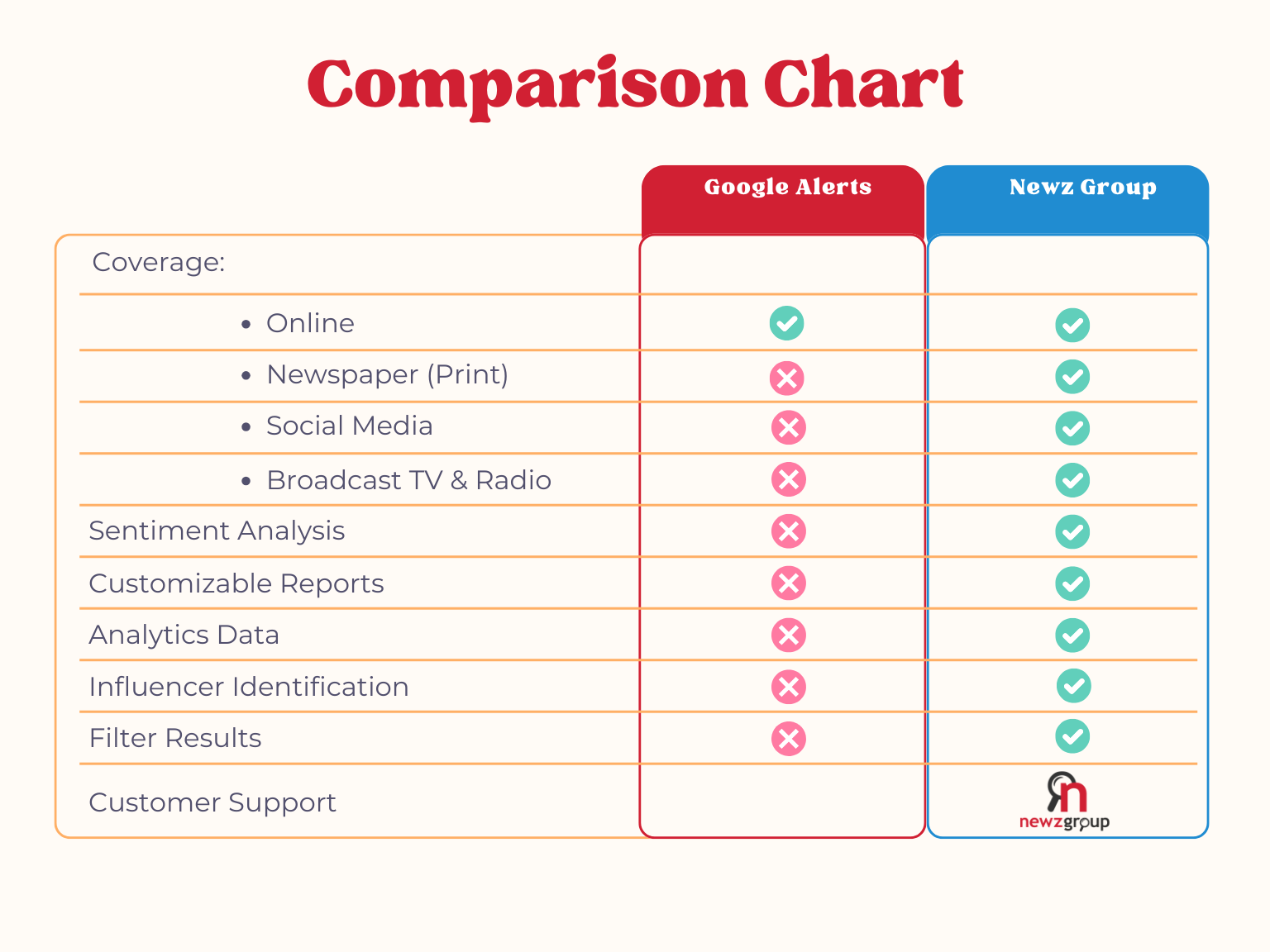
Is your current monitoring strategy truly giving you the full picture? While Google Alerts is a widely used and convenient tool, you need understand its inherent limitations. To effectively manage your reputation, track competitors, and seize opportunities, you need more than just surface-level notifications. Discover why a dedicated media monitoring service isn’t just an alternative to Google Alerts – it’s an essential upgrade that provides the comprehensive coverage, real-time insights, and advanced analytics crucial for success in today’s media landscape. We’ll break down the key differences that impact your brand’s visibility and strategic decisions.

Google Alerts

Google Alerts is a free service provided by Google that allows you to monitor the web for new content. Here’s a quick breakdown:

  • Capabilities:
    • You enter specific keywords or topics that are important to you.
    • Google then searches its indexed web content for matches.
  • Advantages:
    • Free service
    • When new matching content is found (like news articles, blog posts, or web pages), Google sends you email notifications.
  • Limitations:
    • Limited coverage of social media.
    • Can produce irrelevant results.
    • Lacks advanced analytics and reporting features.
    • Not real time in many cases.
    • Lacks in depth sentiment analysis.

In short, it’s a tool for getting notified when new web content related to your chosen keywords appears.

A blog banner that reads: "Save time and see more media mentions with newz group. Click here"

Media Monitoring Services:

  • Capabilities:
    • Comprehensive monitoring of online news, social media, broadcast, and print media.
    • Real-time alerts across online, social and broadcast TV & Radio media.
    • Advanced filtering and search options for precise results.
    • Sentiment analysis to gauge public opinion.
    • Detailed analytics and reporting tools.
    • Often include tools for media contact databases, and PR campaign management.
    • Wider language coverage and translation.
  • Advantages:
    • Greater accuracy and relevance in results.
    • Ability to track brand reputation and public perception.
    • In-depth insights into media coverage and trends.
    • Ability to quantify the impact of media coverage.
  • Limitations:
    • Typically offered as a month to month or 12 month subscription service, with the cost dependent on the desired channels monitored.

Conclusion

  • Google Alerts is a good starting point for basic monitoring.
  • Media monitoring services offer a more robust and comprehensive solution for businesses and organizations that require in-depth media analysis and reporting.

While Google Alerts is a helpful, free tool, media monitoring services provide much more advanced and thorough monitoring, analytics, and reporting capabilities.

Learn more about media monitoring services: https://newzgroup.com/media-monitoring-services/

Explore another great blog post about media monitoring here: https://blog.newzgroup.com/archives/13959

Our complete list of blogs here: https://blog.newzgroup.com/

A blog banner that reads: "Save time and see more media mentions with newz group. Click here"
tall banner that reads: "Save time and see more media mentions with Newz Group. Click Here."